
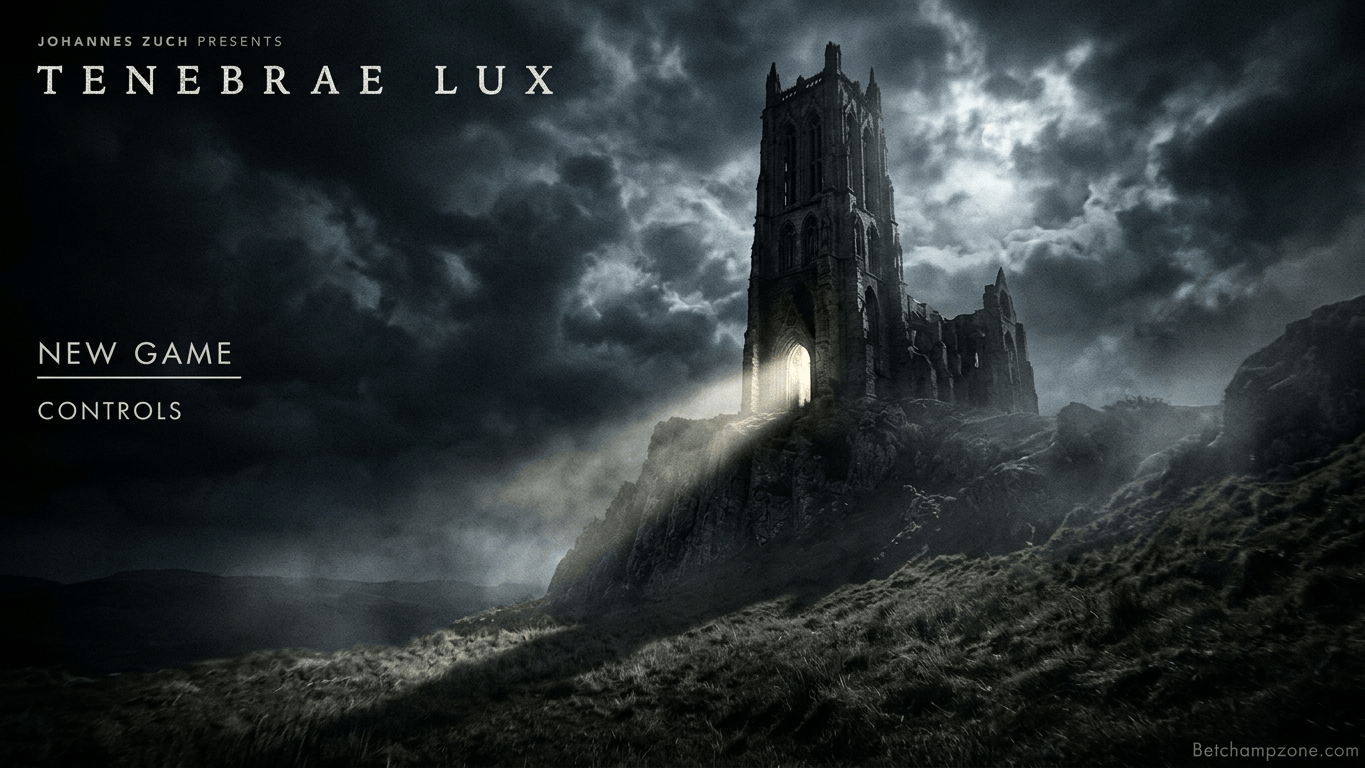
If you searched for Tenebrae Lux this week, you most likely ran into it in Grand Theft Auto VI. It is a game inside the game: a pretentious, black-and-white puzzle title that your characters can play on a console at home. This guide covers what it is, how you find it, what the puzzles are like and whether it’s worth the detour.
What Tenebrae Lux is
Tenebrae Lux is a fictional indie puzzle game that exists only inside GTA VI. According to Kotaku’s review, published November 20, 2026, it runs on the in-world JoyStation and lists a release date of November 19, 2026, the same day as GTA VI. The reviewer describes it as a “pretentious puzzler” and spent roughly two to three hours with it.
Like much of the in-game media in the series, it is satire. In the reviewer’s reading, the target is the “auteur” game designer: one creator credited with every job, whose work is full of heavy atmosphere and very little meaning. The fictional creator’s name is a crude pun, and the reviewer notes echoes of well-known real-world figures. Treat that as one critic’s interpretation, not something Rockstar has confirmed.
What the name means
The name is Latin. Tenebrae means darkness or shadows, and lux means light. Together they describe the game’s whole pose: brooding talk of darkness, light, fate and horror.
The pairing also echoes older phrases. Post tenebras lux, “after darkness, light,” is a Latin motto associated with the Protestant Reformation. Lux in tenebris, “light in the darkness,” comes from the Latin text of the Gospel of John. Strictly speaking, “tenebrae lux” is not a grammatical Latin sentence, just two words placed side by side. The grandiose sound without the substance fits the joke, though that reading is my own analysis, not an official explanation.
How you reach it in GTA 6
You first meet Tenebrae Lux during a story scene at Jason’s home. Cal sets up the console in the living room and talks up the game’s creator, and you play a short introductory section. The reviewer says this section lasts about ten minutes and is mostly there to deliver the joke.
After that scene, the review says you can go back to the game on your own. That is where the real puzzles are, so the first section doesn’t tell you much about the rest. I could not confirm how the console is unlocked or whether it can be reached at every point in the story. Check this yourself in your own save.
What it looks like and how it plays
The game is rendered in black and white. You play a brooding narrator washed up on an island with some crumbling shacks and a lighthouse whose beam sweeps across the landscape. There is swaying grass, ominous music, a faint crying sound, and bright lights in the distance that hint at where to explore. An opening-screen quote, attributed to a made-up author, is pure parody.
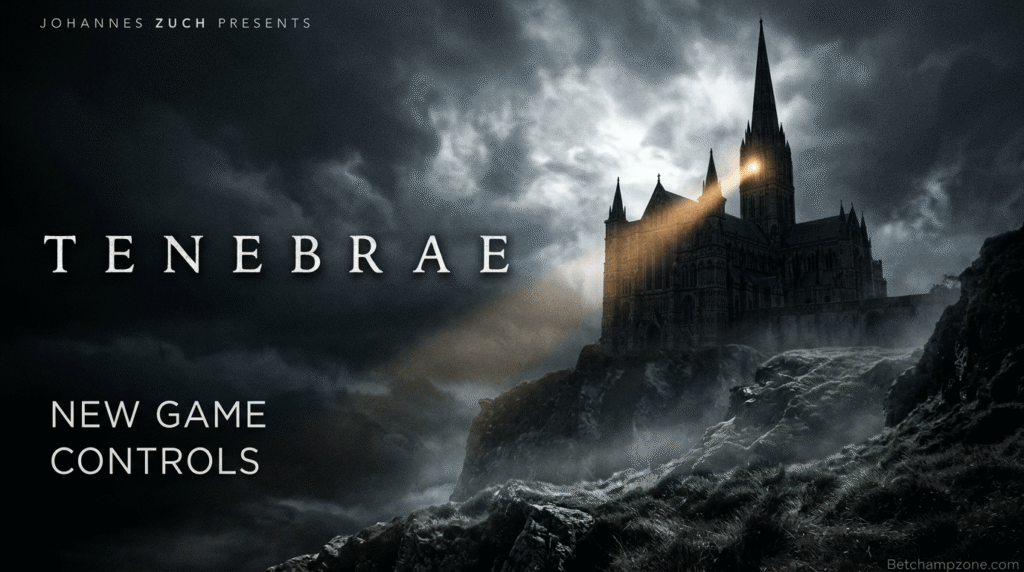
The puzzles are not what the setup suggests. Based on the Kotaku review, the structure looks like this:
- Opening puzzles: Basic grid puzzles where you move pieces around a board to clear them.
- Two major puzzles: A looping room where you must work out a six-digit code while sea shanties play and a man shouts from behind a door, and a bridge covered in glowing symbols that requires a specific crossing pattern.
- Smaller puzzles: Short ones that bookend the two big ones.
- Possible extra content: The reviewer mentions a secret ending that reportedly involves collecting notes. I could not verify how it works.
The bridge puzzle reportedly depends on a poem and a nearby ruin. The reviewer says both major puzzles reward close observation and lateral thinking.
The looping room may differ between players
The most interesting detail in the coverage is that the looping room’s contents reportedly vary by player. The reviewer saw record albums that other players never saw, and others saw a painting that never appeared in their game. Since those objects are part of how you solve the puzzle, the design appears built to resist simply looking up the answer.
This is a single reviewer’s report from launch week, so I can’t say how widely the variation applies. If it holds, it means a walkthrough written for someone else’s version of the room may not match yours.
Practical tips for playing
These follow from the reports above rather than from my own playthrough.
- Keep a notebook. The reviewer says they used one. Writing down symbols, numbers and lines of text is easier than relying on memory in a looping room.
- Don’t rush the major puzzles. The reviewer says they spent a couple of hours on the two big ones.
- Be careful with walkthroughs. If the room varies, an answer copied from someone else may not fit your version.
- Go back after the intro. The satire in the opening scene is only part of it. The puzzles come later.
Is it worth playing?
That depends on what you want from GTA VI. If you came for heists and open-world chaos, you can skip it with no penalty. If you enjoy logic puzzles and a good parody, the reviewer’s verdict is positive: they call it a surprisingly good diversion and say they felt compelled to return for the secret ending.
The limits are fair to state. This is one outlet’s review, the game is short, and the story gives no sign that it matters beyond the joke. It is a side attraction, and it is built that way on purpose.
Common questions
Is Tenebrae Lux a real game I can buy?
Based on current reports, no. It is a fictional game that exists inside GTA VI. I found no sign of a separate release.
Do I need to finish GTA 6 to play it?
Not according to the review, which describes playing it early, during a story scene. I could not confirm every unlock condition.
How long does it take?
The Kotaku reviewer spent about two to three hours, including time scribbling in a notebook. Your time will vary depending on how you handle the two major puzzles.
Who made Tenebrae Lux?
Within the fiction, the game is credited to a single creator whose name is a joke. In the real world, Rockstar Games made it as part of GTA VI.
Does the game have a hidden ending?
The reviewer mentions a possible secret ending involving collected notes, but this is not confirmed, and I have no details on how it works.
The bottom line
Tenebrae Lux is a small piece of satire with a surprising amount of puzzle design behind it. It mocks a certain kind of art-game pretension while still giving you something to chew on. If puzzle games are your thing, it’s worth an evening away from the main story. Since the game is days old, expect more details, solutions and corrections to emerge as players dig deeper.
