
If you searched this phrase, you’ve probably noticed something odd: most pages that use it define it in circles, without ever pointing to a specific company, app, or event series. That’s worth saying plainly, because it matters for how you should read what follows.
“PBLGamevent” is not a registered platform, publisher, or widely recognized brand name in gaming or esports. There’s no verifiable company, product, or official event series operating under that exact name. What the phrase does capture — and what’s genuinely useful to understand — is the broader concept it’s built from: a hosted gaming event, sometimes loosely tied to PBL (play-based or problem-based learning) framing used in community and educational gaming spaces hosted event pblgamevent.
So rather than pretend this is an established industry term with a fixed definition, this article covers what a hosted gaming event actually is, how these events are run in practice, and what to look for whether you’re organizing one or joining one. That’s the information someone searching this phrase is actually trying to find hosted event pblgamevent.
What a Hosted Gaming Event Is
A hosted gaming event is any gaming activity — casual, competitive, or educational — that’s planned and run by a dedicated organizer rather than happening spontaneously. The organizer sets the rules, schedule, format, and communication channels before anyone plays hosted event pblgamevent.
This is different from just jumping into a public match or open lobby. In a hosted event, someone has decided in advance:
- Which game or games are being played
- How players register and get matched
- What format the competition follows (single elimination, round robin, Swiss, etc.)
- How disputes or rule violations are handled
- Whether there are prizes, recognition, or just bragging rights
The “host” can be almost anyone with the tools to organize: an esports organization, a school or educator using games for a class project, a content creator running a community tournament, a Discord server admin, or a brand running a promotional event.
How These Events Are Typically Organized
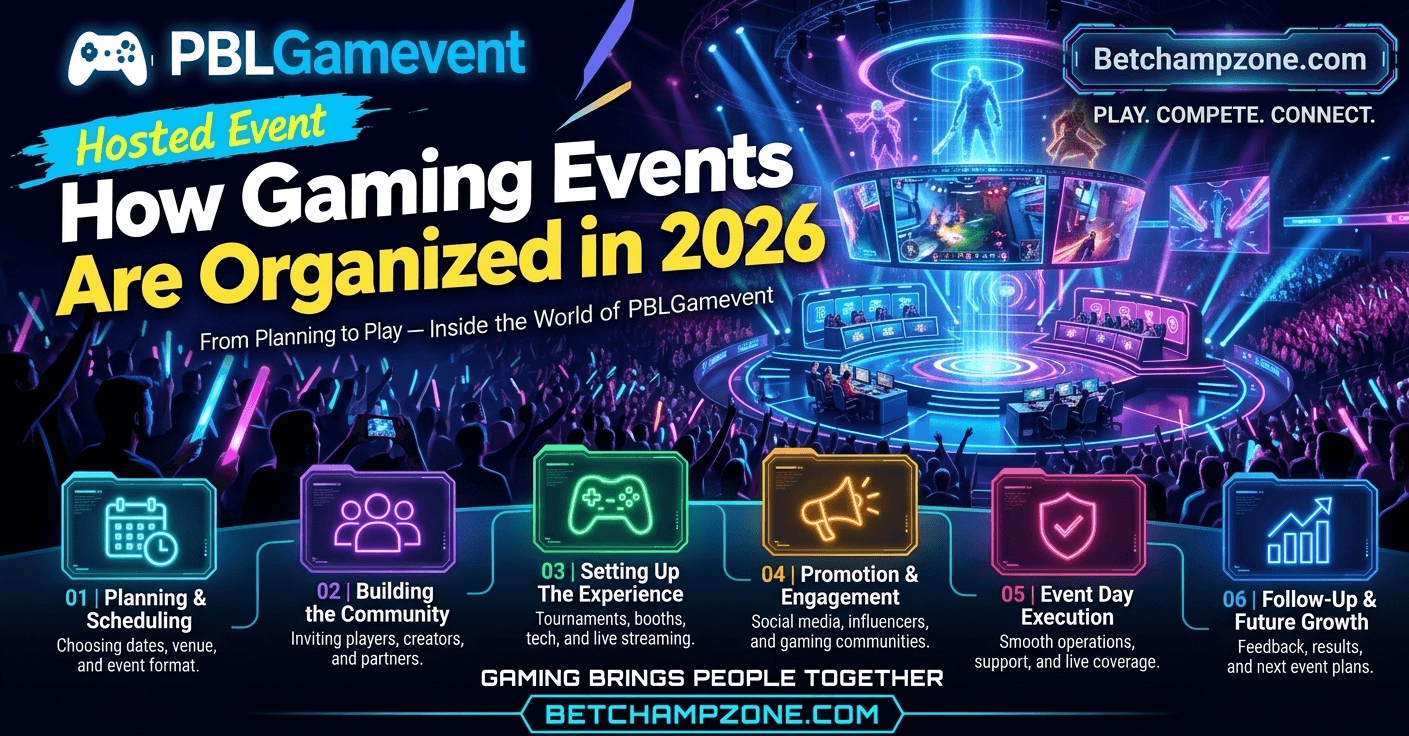
Most hosted gaming events, regardless of scale, go through a similar sequence:
1. Planning and game selection. The organizer picks a game that fits the audience and decides on a format. A large multiplayer title suits a bracket tournament; a puzzle or strategy game might suit a leaderboard-style event instead.
2. Registration. Players sign up through a form, a tournament platform (common tools include Toornament, Challonge, or Battlefy), or directly in a community space like Discord.
3. Bracket or schedule creation. Once registration closes, the organizer builds the match schedule. For larger events this is often automated by tournament software; for smaller ones it’s done manually.
4. Communication. Players need to know when and where to show up. This usually happens through a shared server, group chat, or event page with reminders.
5. Running the event. Someone moderates matches, resolves disputes, and keeps things on schedule. In streamed events, this also includes coordinating broadcast timing.
6. Wrap-up. Results get posted, winners (if any) are announced, and feedback is sometimes collected for future events.
Why the “Hosted” Structure Matters
The difference between a hosted event and casual play isn’t just paperwork — it changes the experience in a few concrete ways:
- Fairness. Fixed rules and a neutral moderator reduce disputes over cheating, lag, or rule interpretation.
- Predictability. Players know when their match is, instead of waiting around indefinitely.
- Accountability. If something goes wrong — a no-show, a disconnect, a rule violation — there’s a defined process for resolving it.
- Community value. Structured events give players a reason to return, build reputation, and connect with others who take the game seriously at whatever level they’re playing.
Common Formats You’ll See
- Single elimination: Lose once, you’re out. Fast, simple, but unforgiving of a bad game.
- Double elimination: Gives players a second chance after one loss before they’re eliminated.
- Round robin: Everyone plays everyone. Works well for smaller groups where fairness matters more than speed.
- Swiss format: Players are matched against others with similar records as the event progresses. Common in larger events where a full round robin isn’t practical.
None of these formats is universally “best” — the right choice depends on how many players you have and how much time the event has to run.
What to Consider Before Joining a Hosted Gaming Event
- Check who’s running it. A known community, streamer, or organization with a track record is generally a safer bet than an anonymous or newly created event page.
- Read the rules before registering. Look for match format, scheduling windows, and what happens if you’re late or disconnect.
- Understand what (if anything) is at stake. Some events are purely for fun or ranking; others involve entry fees or prizes, which should be clearly and transparently listed.
- Confirm the platform. Legitimate events use recognizable registration and bracket tools, or clearly explained in-house systems — not vague sign-up links with no information about the organizer.
Common Mistakes Organizers Make
- Underestimating scheduling conflicts. Time zones and overlapping matches are the most common source of complaints in online events.
- Vague or missing rules. Disputes almost always trace back to something that wasn’t written down clearly beforehand.
- No backup plan for disconnections or no-shows. Even a simple rule (e.g., a grace period before forfeit) prevents a lot of frustration.
- Overloading the format for the player count. A double-elimination bracket for six players can drag on far longer than it needs to; matching format to group size matters.
Frequently Asked Questions
Is “PBLGamevent” an official gaming platform?
No. There’s no verified company or product by that exact name. The phrase appears to be used loosely around the general concept of hosted, structured gaming events.
Do I need special software to run a hosted gaming event?
Not necessarily. Small events can be run manually through a spreadsheet and a group chat. Larger events typically benefit from dedicated tournament software to handle brackets and scheduling automatically.
Are hosted gaming events only for competitive players?
No. Many are casual, community-focused, or educational, especially those built around collaborative challenges rather than head-to-head competition.
What does “PBL” mean in this context?
Where it appears in gaming-education contexts, PBL usually refers to play-based or problem-based learning — an approach where games are used as structured learning tools rather than pure entertainment. It’s not a formal certification or standard.
Conclusion
There’s no established platform or brand called “PBLGamevent” — but the underlying idea behind the search, a well-organized, rules-based gaming event with a clear host, is a real and useful concept. Whether you’re planning one or deciding whether to join one, the same basics apply: clear rules, a reliable organizer, a format that fits the group, and transparent communication from start to finish. Get those right, and the event will work regardless of what it’s called.
