
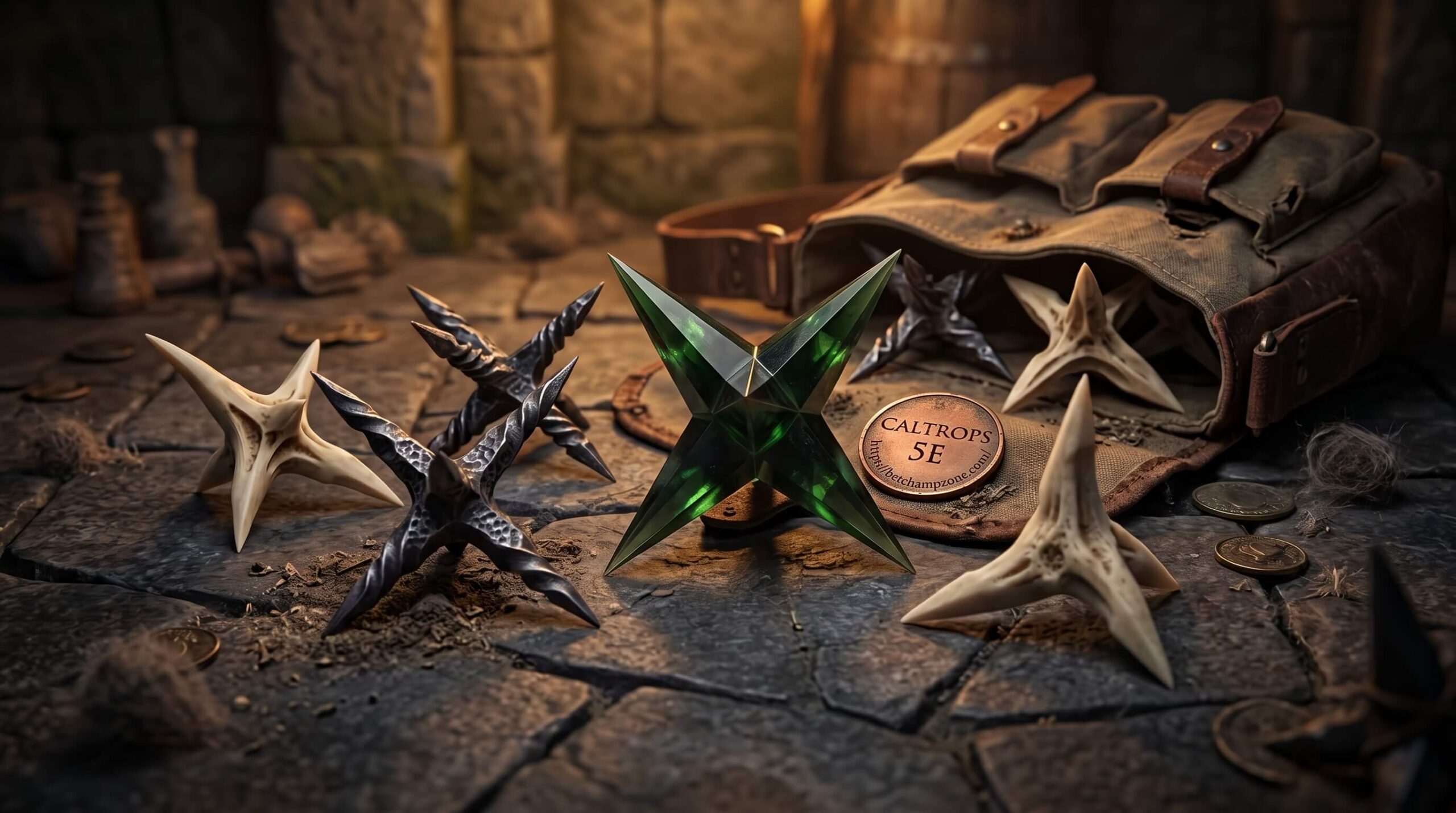
Caltrops are a simple, inexpensive piece of adventuring gear in Dungeons & Dragons 5th Edition that can slow or stop enemies in their tracks. A bag of these four-pronged metal spikes turns a small patch of ground into a hazard that forces careful movement or risk of injury and reduced speed. This guide covers the official rules for both the 2014 Player’s Handbook and the 2024 revision, practical uses, limitations, and common questions so you can decide when they are worth carrying.
What Are Caltrops 5e?
Caltrops are small iron spikes designed so that one point always faces upward no matter how they land. In the game they function as a deployable area control tool rather than a traditional weapon. One bag covers a single 5-foot square. They appear on the Adventuring Gear table and are available at most shops that sell basic equipment.
Official Rules and Stats
2014 Player’s Handbook / SRD Version
- Cost: 1 gp (bag of 20)
- Weight: 2 lb.
As an action, you spread a bag of caltrops to cover a square area that is 5 feet on a side. Any creature that enters the area must succeed on a DC 15 Dexterity saving throw or stop moving this turn and take 1 piercing damage. Taking this damage reduces the creature’s walking speed by 10 feet until the creature regains at least 1 hit point. A creature moving through the area at half speed doesn’t need to make the saving throw.
2024 Player’s Handbook Version
- Cost: 1 GP
- Weight: 2 lb.
As a Utilize action, you can spread Caltrops from their bag to cover a 5-foot-square area within 5 feet of yourself. A creature that enters this area for the first time on a turn must succeed on a DC 15 Dexterity saving throw or take 1 Piercing damage and have its Speed reduced to 0 until the start of its next turn. It takes 10 minutes to recover the Caltrops.
The 2024 version is stricter on placement range, changes the speed penalty to a temporary full stop, and adds a recovery time. Most tables still running the 2014 rules use the older wording.

How Caltrops Work in Play
The hazard triggers only when a creature voluntarily enters the square (or, in some interpretations of the 2014 text, moves into it). Forced movement such as being pushed or pulled generally does not trigger the effect. Flying, swimming, or climbing creatures that never touch the ground ignore the spikes entirely. Creatures that can move at half speed simply pick their way through without rolling.
The speed reduction in the 2014 rules lasts until the creature receives any healing that restores at least 1 hit point. Magical healing, a short rest with hit dice, or even the spare the dying cantrip can clear it. Multiple bags in the same square do not stack their effects; the rules for combining game effects of the same name prevent the speed penalty from applying more than once.
Practical Tactics and Uses
Caltrops shine in defensive or delaying situations. Drop them in a doorway, corridor, or chokepoint just before combat starts so enemies must either slow down or risk the save. They pair well with opportunity attacks: an enemy forced to stop in the square becomes an easy target. Rogues and other high-mobility characters can deploy them and then Disengage or Dash away, leaving pursuers hindered.
They are also useful for controlling the battlefield when you expect reinforcements. A single bag costs almost nothing and weighs little, so many parties keep two or three on hand. Against large groups of low-Dexterity foes such as zombies or certain humanoids, the DC 15 save can reliably blunt a charge.
Caltrops vs. Ball Bearings
Ball bearings cover a larger 10-foot square, use a lower DC 10 Dexterity save, and cause the Prone condition instead of damage and speed loss. Caltrops deal a point of damage, impose a lasting (or temporary) movement penalty, and have a higher DC. Choose caltrops when you want to slow specific threats or deal minor damage; choose ball bearings when you need a wider area or to knock creatures down. Many groups carry both.
Limitations and Common Mistakes
Caltrops are not effective against every enemy. Flying creatures, those with high Dexterity, or creatures that can move carefully ignore them. They require an action (or Utilize action) to deploy, so you cannot always place them mid-fight without giving up an attack. In theater-of-the-mind play the exact 5-foot square can be harder to track than on a battle map. Finally, once deployed they stay until recovered or the area is cleared; allies must also avoid or carefully cross them.
A frequent rules question is whether the speed reduction stacks. It does not. Another is whether the “stop moving this turn” wording prevents further movement that turn—it does on a failed save under the 2014 rules.
Frequently Asked Questions
Do caltrops work against Large or Huge creatures?
Yes, unless the DM rules that the creature’s size or foot shape makes the spikes ineffective. The rules do not grant automatic immunity based on size.
Can you recover and reuse them?
Under 2014 rules the book is silent, so most tables allow recovery after combat if the area is safe. The 2024 rules explicitly require 10 minutes to gather them.
Do they trigger opportunity attacks or other reactions?
No. The save and effects happen as part of the creature’s movement into the square.
Are there magical versions?
Yes. Third-party and some official supplemental items include enhanced caltrops that deal more damage, apply conditions, or expand the area. These are not part of the core rules.
Final Thoughts
Caltrops remain one of the most cost-effective tools in the adventuring gear list. For the price of a single gold piece you gain a reliable way to control movement and punish careless enemies. Whether you use the 2014 or 2024 rules, keeping a bag or two in your pack is rarely a waste of inventory space. Deploy them thoughtfully at choke points, respect their limitations against aerial or careful foes, and they will pay for themselves many times over in the right encounter.
